ABOUT THIS LESSON
When it comes to drawing anything, the best approach is to keep it simple! No matter how complex the subject is, we can use primitive geometry to construct and sculpt it out.
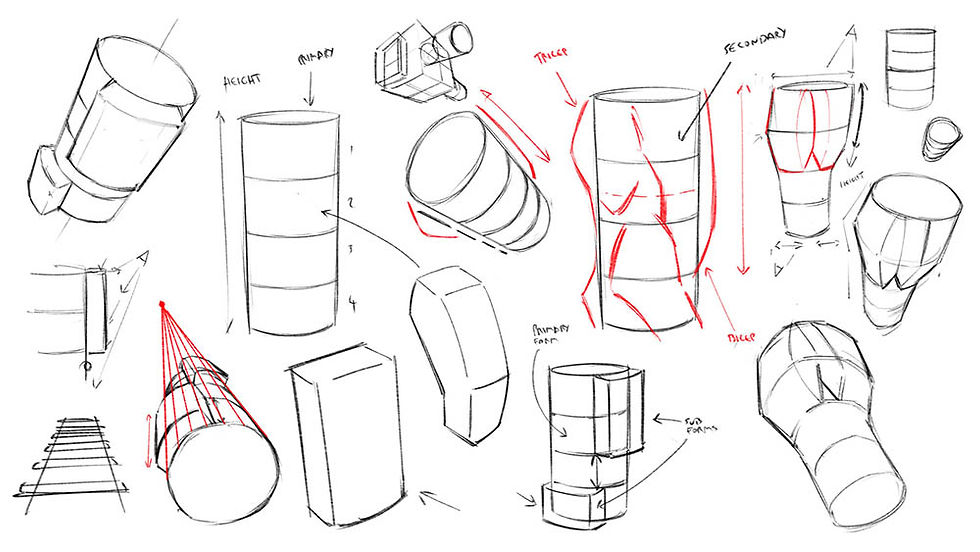
Secondary forms are then used to build up the drawing, and capture the more complex aspects of it's geometry.
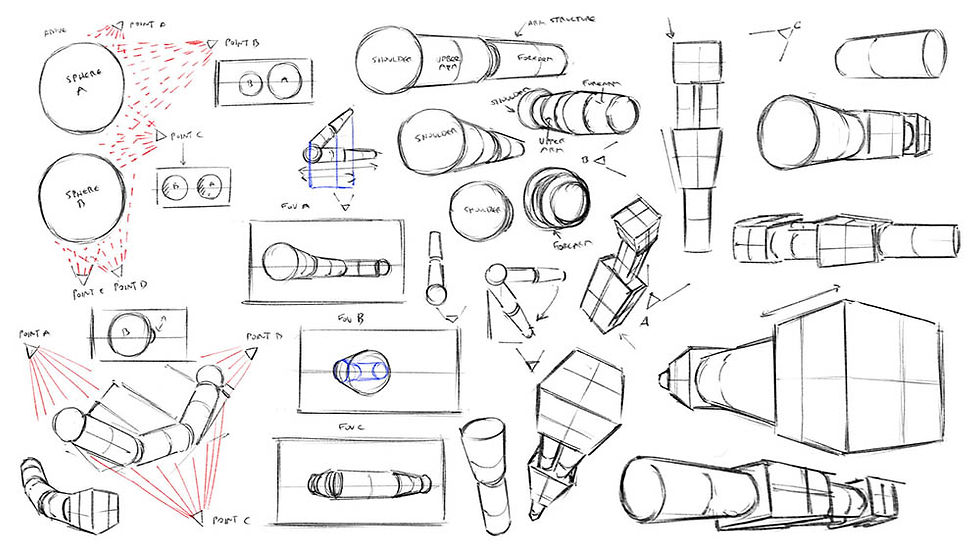
It's easy enough to foreshorten primitive shapes such as blocks and cylinders. But as we begin to add subforms to these larger, overarching forms, things can get complicated.
Not only must the scale, placement and proportions of the primary forms be kept in mind, we also need to give the same considerations to the secondary forms as we place the subject in perspective.
In this lesson we'll take an in-depth look at the effects of foreshortening applied to subforms. This is especially useful for understanding how to foreshorten the muscles throughout the human body - as they are in fact secondary forms that are placed on top of the base figure.
By the end of this lesson you'll not only be more confident, and competent at foreshortening in general - but you'll have begun developing the skill to foreshorten complex subject matter, in a dynamic and impactful way!